
Why Authenticity Matters
The market for mid-century modern furniture has grown dramatically over the past two decades. With that growth has come a flood of reproductions ranging from high-quality licensed reissues to cheap knockoffs. Whether you are building a serious collection or simply want to furnish your home with genuine vintage pieces, knowing how to tell the real thing from a copy is an essential skill.
Authentic mid-century furniture holds its value, carries a tangible connection to design history, and almost always exhibits a quality of craftsmanship that modern mass production rarely matches. Here is what to look for.
Check the Construction
Original mid-century furniture was built to last. Manufacturers like Herman Miller, Knoll, Drexel, and Danish makers such as France & Son used solid hardwoods, quality veneers, and joinery techniques that remain sturdy after decades of use.
- Dovetail joints on drawers are a hallmark of quality. Machine-cut dovetails from the era are uniform but slightly irregular compared to modern CNC-cut joints.
- Solid wood frames rather than particleboard or MDF. Pull out a drawer and look at the sides and back. Plywood or solid wood is a good sign.
- Weight and sturdiness. Genuine vintage pieces tend to feel heavier and more solid than reproductions made with cheaper materials.
- Patina and wear. Authentic vintage furniture shows honest signs of age: slightly rounded edges, minor surface scratches, and a warm, aged tone to the wood that cannot be faked easily.
Look for Labels, Stamps, and Marks
This is often the fastest way to verify a piece. Many mid-century manufacturers marked their furniture, though the location and style of the mark evolved over the years.
- Herman Miller used foil labels, round medallions, and later rectangular stickers. The style of the label can help date the piece.
- Knoll pieces often carry a stamped or printed label on the underside of chairs and tables.
- Danish pieces frequently have a branded or stamped mark on the frame, sometimes accompanied by a "Made in Denmark" label or a "Danish Control" stamp, a quality assurance mark used from the late 1950s onward.
- Drexel, Lane, and Broyhill typically used paper labels or ink stamps on the inside of drawers or on the back panel.
Keep in mind that labels can fall off, be removed, or deteriorate over time. The absence of a label does not automatically mean a piece is inauthentic, but the presence of a correct period label is strong confirmation.
Study the Materials
Mid-century designers favoured specific materials that reflect the era's aesthetic and technological innovations.
- Teak, walnut, and rosewood were the dominant woods. Teak is warm and golden with a slightly oily feel. Walnut has a rich, chocolatey grain. Rosewood, now heavily restricted, has a deep reddish-brown colour with dramatic figuring.
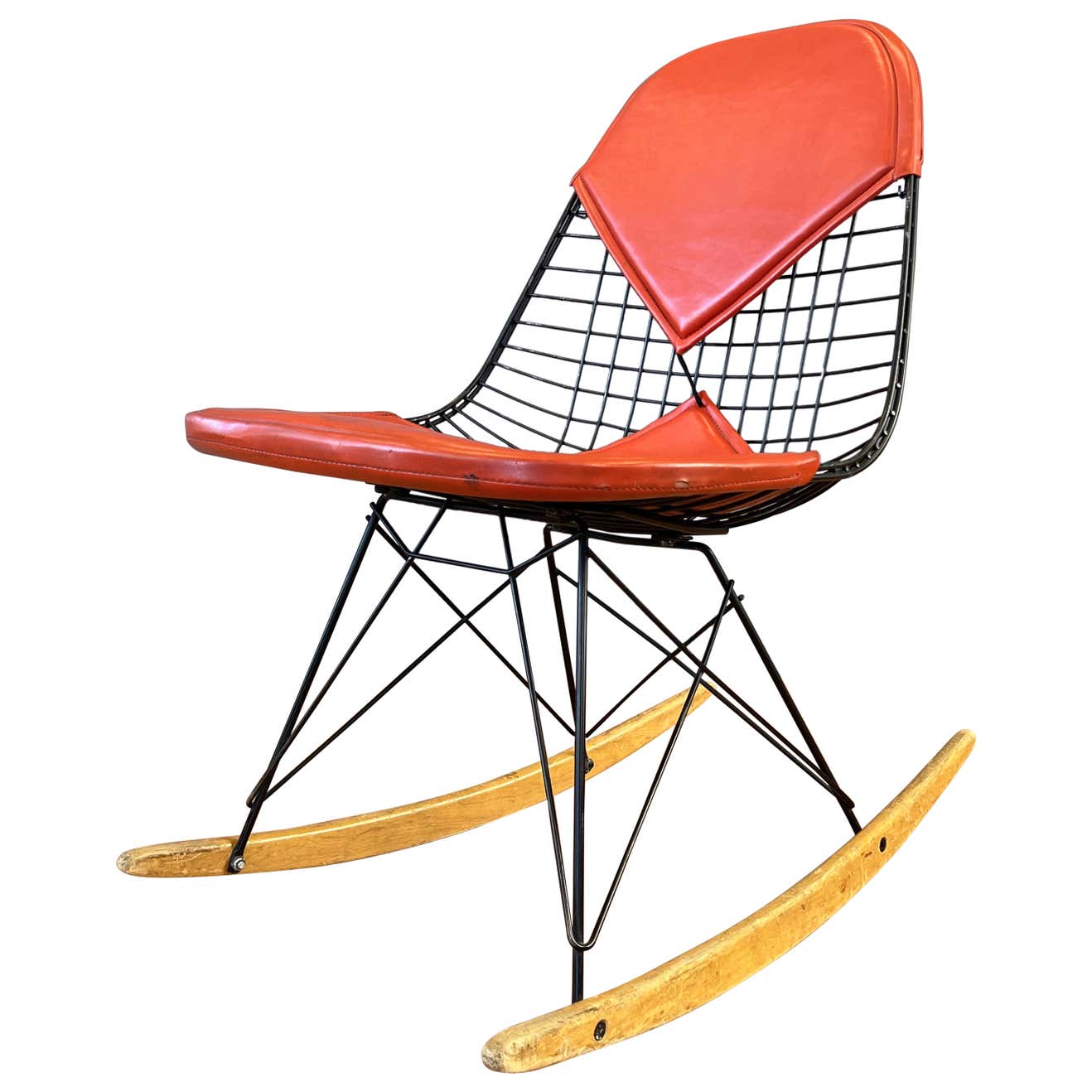
- Moulded plywood and fibreglass were revolutionary materials in the 1940s and 1950s. Eames chairs, for example, use moulded plywood shells with visible grain and a smooth, slightly flexible feel.
- Chrome and brushed steel on bases and legs should show a depth and weight that thin, modern chrome plating does not.
- Original upholstery is rare but can be a powerful clue. Fabrics by Alexander Girard or Knoll Textiles, for instance, have specific weave patterns and colours documented in reference books.
Research the Design
Before you buy, take time to research the specific piece. Books like Miller's Mid-Century Modern or online resources from design museums can help you identify the original manufacturer, designer, and production years.
Pay attention to proportions. Reproductions sometimes alter dimensions to cut costs, making a chair slightly shorter or a table narrower than the original specification. If the piece looks right but feels slightly off, measure it and compare against documented dimensions.
Buy from Trusted Sources
Working with knowledgeable dealers is the best way to ensure authenticity. At Past Perfect, our collective of experienced dealers has spent years handling and evaluating vintage furniture. Every piece in our San Francisco showroom is vetted for authenticity, condition, and provenance.
If you are shopping online or at estate sales, apply the checks above and do not hesitate to ask for detailed photographs of labels, joints, and the underside of pieces before committing. A reputable seller will always be willing to provide this information.