
A Design Movement Born from Necessity
Danish modern design did not emerge from a single manifesto or a single designer. It grew out of a postwar Scandinavian culture that valued practicality, natural materials, and democratic access to good design. In the 1940s and 1950s, Denmark was a small country with limited industrial resources. Furniture makers responded by creating pieces that were elegant, functional, and efficiently produced, often from locally available hardwoods like teak and oak.
The Copenhagen Cabinetmakers' Guild exhibitions, held annually from 1927 to 1966, became a proving ground for a generation of designers who would define the movement: Hans Wegner, Finn Juhl, Arne Jacobsen, Borge Mogensen, and Poul Kjaerholm, among others. Each brought a distinct voice, but all shared a commitment to organic forms, honest materials, and meticulous craftsmanship.
What Makes Danish Modern Distinctive
Several qualities set Danish modern furniture apart from other mid-century styles:
- Organic, sculptural lines. Danish designers treated wood as a medium for sculpture. The arms of a Wegner Wishbone Chair or the flowing back of a Finn Juhl Chieftain Chair have a warmth and expressiveness that purely geometric modernism lacks.
- Warmth of materials. Where the Bauhaus favoured steel and glass, Danish designers chose teak, rosewood, oak, and leather. The result is furniture that feels inviting rather than austere.
- Human scale. Pieces are proportioned to the body. Seats are at a comfortable height, armrests fall where your arms naturally land, and tables relate to the chairs placed around them.
- Restrained ornamentation. Decoration comes from the material itself: the grain of the wood, the texture of woven cord, the patina of brass hardware. Nothing is added for its own sake.
Key Designers and Their Signatures
Hans Wegner designed over 500 chairs in his lifetime. His Round Chair, named the world's most beautiful chair by Interiors magazine in 1950, introduced Danish modern to an American audience. Look for his sculptural arm joints and meticulously shaped seats.
Finn Juhl brought a more artistic, almost surreal sensibility to furniture. His pieces often feature floating seats and backs that appear to defy gravity, with frames and cushions treated as separate visual elements.
Arne Jacobsen worked across architecture and design, creating iconic pieces like the Egg Chair and the Swan Chair, both designed for the SAS Royal Hotel in Copenhagen in 1958. His work tends toward the more industrial end of Danish modern.
Poul Kjaerholm was the exception who embraced steel, but his PK series of chairs and tables still carries the Danish sensibility in its proportions, material pairings, and attention to detail.
Why It Still Works in Contemporary Interiors
Danish modern furniture has experienced a sustained revival since the early 2000s, and its popularity shows no sign of fading. The reasons are practical as much as aesthetic.
The clean lines and neutral wood tones work in nearly any setting, from a minimalist loft to a Victorian house. A teak credenza or a set of rosewood nesting tables does not compete with other styles; it complements them. The quality of construction means that a well-maintained piece from the 1960s can look and function as well as anything made today.
There is also a sustainability argument. Buying a sixty-year-old teak sideboard keeps it out of a landfill and avoids the environmental cost of manufacturing something new. The best Danish modern furniture was built to last generations, and it has.
Collecting Danish Modern in San Francisco
At Past Perfect, we have always carried a strong selection of Danish modern furniture. Our dealers source teak dining sets, rosewood sideboards, leather lounge chairs, and smaller accent pieces from estates and private collections across the Bay Area and beyond.
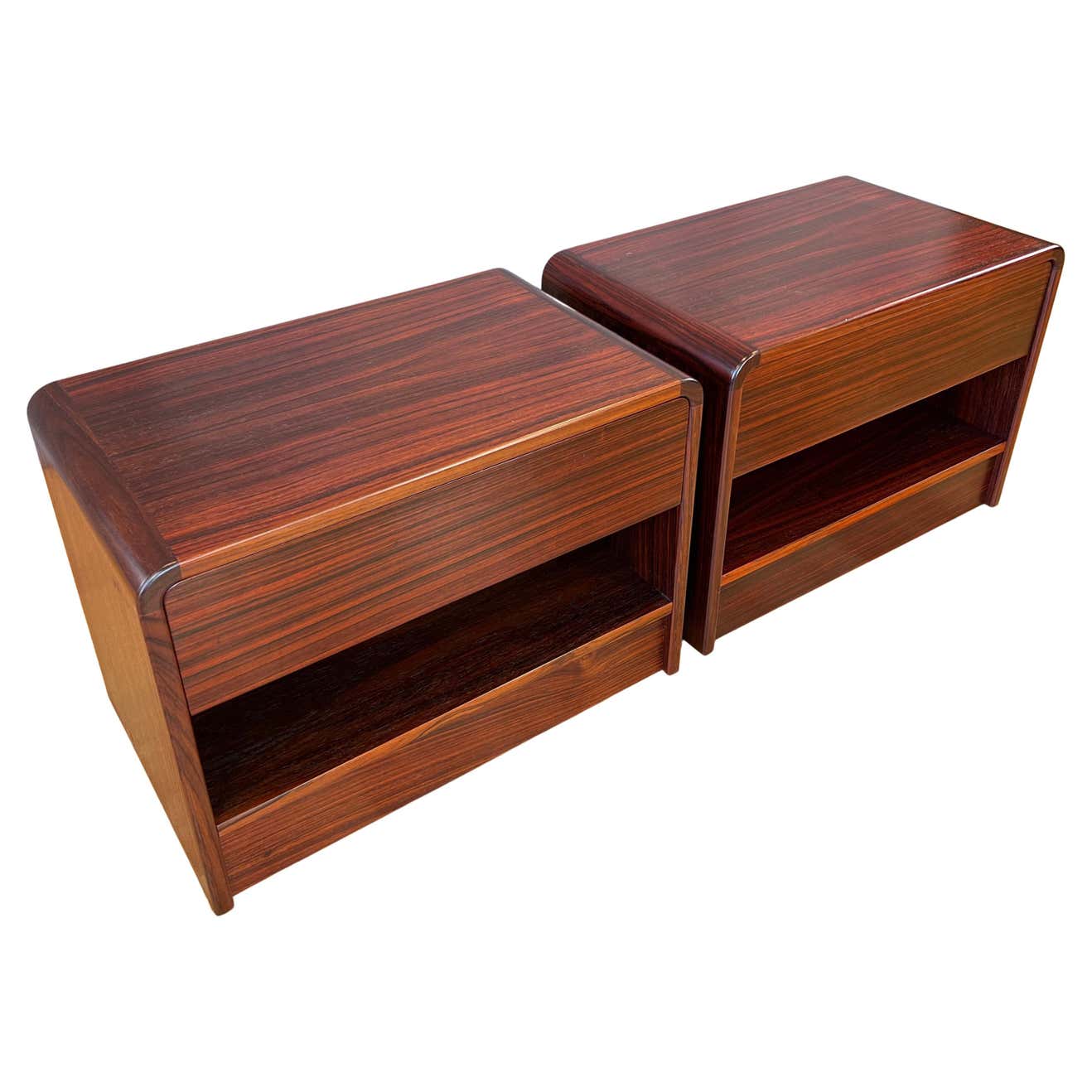
If you are new to collecting, start with a single strong piece, a well-proportioned credenza, a pair of nightstands, or a dining table, and build around it. The beauty of Danish modern is that pieces from different makers and decades tend to harmonise naturally. Visit our showroom to see what is currently available, or contact us if you are looking for something specific.